
Infection prevention at home is one of the simplest ways to protect an older adult who is recovering from a hospital stay, managing a chronic condition, or relying on a caregiver. October 19–25, 2026 is International Infection Prevention Week, which makes it a good time to review the habits that keep a household safer all year.
Older adults and people living with chronic conditions may face a higher risk of complications from certain infections. That is especially true for families helping someone care for a wound or use medical equipment.
The good news is that you do not need to turn your home into a hospital. Dependable daily habits, plus any extra precautions from the person’s healthcare team, go a long way.
At Eden Health, we believe the best care routines are the ones families can realistically follow. These 10 essential steps for caregiver infection prevention can help you create a safer care environment while still letting home feel like home.
Why Infection Prevention at Home Matters as Fall Turns to Winter
Respiratory illnesses tend to be more common in the fall and winter, and colder weather in Southeast Idaho means more time indoors together. Families in Idaho Falls, Pocatello, Rexburg, and nearby communities often feel this most when someone is recovering at home.
Strong infection prevention at home does not depend on special equipment. It depends on habits that are easy to repeat and a clear plan for when to ask for help.
1. Start With Clean Hands: Hand Hygiene at Home
Clean hands are the foundation of infection prevention at home, and one of the most important tools caregivers have for reducing the spread of germs.
Hands move constantly between people and objects: a phone, a doorknob, a meal, a medication bottle, a walker, a tissue, a wound dressing, or the person you are helping. That makes them an easy way for germs to travel.
Keep soap and a clean way to dry hands available at sinks. If limited mobility makes a sink difficult to reach, ask the care team how to make hand hygiene accessible. Store hand sanitizer safely, out of children’s reach.
The CDC recommends scrubbing your hands with soap for at least 20 seconds, then rinsing and drying them. When soap and water are unavailable, sanitizer with at least 60% alcohol can help. Use soap and water when hands are visibly dirty, and follow infection-specific instructions from the care team.
2. Know When to Clean Your Hands
Focus on the moments when germs are most likely to spread. For a family caregiver, those moments can include:
- Before preparing food
- Before helping with medications or care tasks
- After using the bathroom
- After coughing, sneezing, or blowing your nose
- After handling soiled laundry or tissues
- After contact with body fluids
- Before and after helping someone who is sick
If gloves are part of a care task, remember that gloves do not replace hand hygiene. Clean your hands as directed before putting them on and after taking them off.
3. Clean Surfaces People Touch Often
Regular cleaning is a core part of infection prevention at home. It removes dirt and many germs, and in most everyday household situations, cleaning is enough. Follow the CDC’s home cleaning guidance and any additional precautions in the patient’s care plan.
Focus first on high-touch areas: doorknobs, light switches, faucets, bathroom fixtures, kitchen counters, phones, remote controls, bedside tables, and commonly used mobility equipment.
Choose a routine your household can maintain. Ask someone to help clean hard-to-reach surfaces if bending or reaching is difficult.
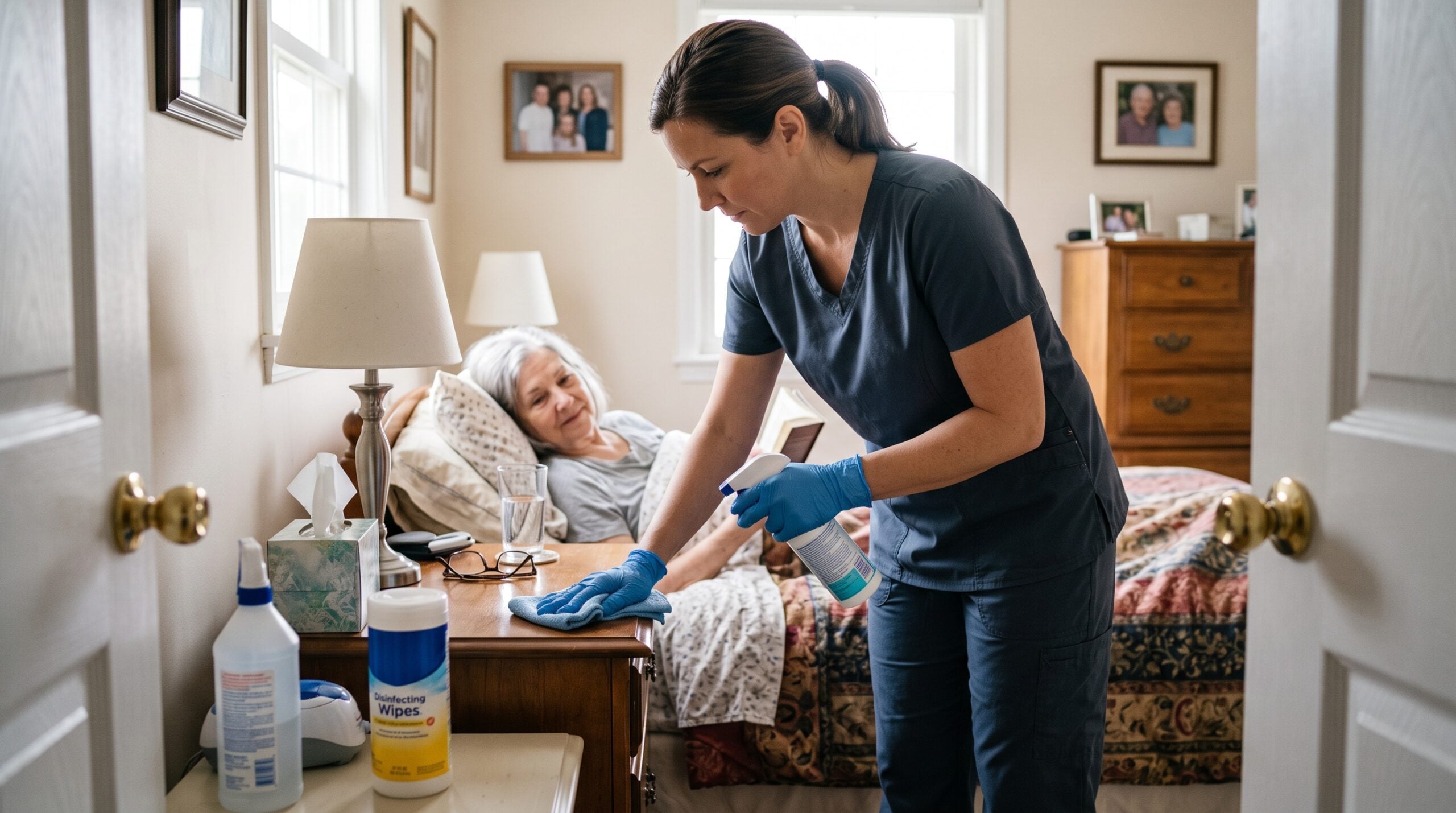
4. Know When to Disinfect
Cleaning and disinfecting are related, but they are not the same thing. Cleaning removes dirt and germs. Disinfecting kills germs left on a surface.
Clean first, then disinfect when someone is sick. If someone has a weakened immune system, ask the care team about additional disinfection.
When you disinfect, follow the product label. Pay attention to ventilation, whether gloves or eye protection are recommended, and the required contact time. A disinfectant may need to stay visibly wet on a surface for a specific amount of time to work properly.
Never mix bleach or disinfectants with other cleaning products. Follow the label for safe use and storage.
5. Build Respiratory Hygiene Into Daily Routines
Respiratory infections can spread through the air as well as through close contact. Surface cleaning is only one part of infection prevention at home.
Encourage everyone in the home to cover coughs and sneezes, dispose of used tissues, and clean their hands afterward. If someone develops respiratory symptoms, give them space when possible and follow current public-health guidance and the patient’s individual care instructions.
The CDC’s respiratory illness prevention guidance also recommends cleaner indoor air and staying up to date with recommended immunizations. Ask the patient’s clinician about suitable precautions, including masks when additional protection is needed.
6. Plan Safer Visits and Backup Caregiving
Social connection matters. Someone receiving care at home should not feel that infection prevention at home means isolation from everyone they love.
Visitors with fever, vomiting, diarrhea, respiratory symptoms, or another contagious illness should postpone in-person visits. A phone call, video visit, or meal left at the door can maintain connection while reducing exposure.
Caregivers should use the same judgment. If you are sick and another trusted person can safely help, it may be appropriate to arrange alternate support. If the patient is immunocompromised or has special precautions, contact the care team for guidance rather than guessing.
7. Follow the Care Plan for Wounds and Medical Equipment
This is where general household advice stops. Infection prevention at home looks different when wounds or medical devices are involved, and the individual care plan becomes especially important.
Wounds, catheters, feeding equipment, oxygen equipment, drains, and other medical devices may require specific handling and cleaning methods. Do not assume that a household disinfectant is safe for medical equipment.
Ask your Eden nurse, treating clinician, or equipment provider to demonstrate the steps and provide written instructions specific to the patient’s equipment and care plan. Then show the steps back while the professional is present so they can clarify anything you have misunderstood.
Also ask what changes should prompt a call. The right answer depends on the wound, device, diagnosis, and treatment plan. A general article should never replace those individualized instructions.
8. Handle Laundry, Food, and Personal Items Safely
Everyday household tasks are part of caring for someone at home, and they usually do not require complicated routines. A few simple habits can support infection prevention at home without adding stress.
Laundry: Follow fabric care labels, use detergent, and dry laundry completely. Wash your hands after handling dirty laundry. CDC guidance says a sick person’s laundry can generally be washed with other household items; follow any different instructions from the care team.
Food: Wash your hands before preparing food and keep food-contact surfaces clean. Follow any additional food-safety instructions from the patient’s healthcare team, particularly if a health condition or treatment affects their immune system or ability to safely eat certain foods.
Personal items: Use clean towels and washcloths, and follow the care team’s precautions for shared items. Keep personal-care items intended for one person, such as toothbrushes, separate.
9. Keep Supplies and Instructions Organized
Good infection prevention at home becomes much easier when caregivers do not have to search for supplies or guess what the last person did.
Keep frequently used care supplies together in a clean, designated location. Make sure the current medication list, medical-equipment instructions, important phone numbers, and after-hours contact information are easy for authorized caregivers to find.
If several family members or caregivers rotate through the home, use a simple handoff system. A notebook or secure shared note can record what was done, what supplies are running low, and what questions need to be asked at the next visit.
Caring for someone with memory changes? Our Alzheimer’s caregiver guide for Southeast Idaho shares more ideas for building routines that work.
10. Know When to Contact the Care Team
Infection prevention at home is not only about stopping problems. It is also about noticing when something has changed and knowing what to do next.
Before you need the information, ask the treating clinician which symptoms or changes should prompt a call, who to contact during office hours, and what number to use after hours.
If you notice a new or worsening symptom, a change around a wound, a problem with medical equipment, or a change in the patient’s overall condition, contact the patient’s healthcare provider or care team promptly for guidance.
Do not use a checklist to diagnose an infection. If something seems different or concerning, the healthcare team is the right place to ask what it means and what should happen next. For a medical emergency, call 911.
How Home Health and Home Care Support Infection Prevention at Home
Skilled home health provides clinical services, such as nursing and rehabilitation, under a clinician’s plan of care. When ordered and appropriate, that may include wound care and education tailored to a patient’s medical needs.
Non-medical home care supports daily activities such as bathing, meal preparation, light housekeeping, and companionship. It does not replace skilled nursing or medical treatment.
Infection prevention at home matters in both settings, and both can help families feel less alone in carrying them out.
Infection Prevention at Home: Questions Caregivers Often Ask
Do I need to disinfect every surface every day?
Usually not. Routine cleaning is enough in many household situations. Disinfect when someone is sick, and ask the care team about additional precautions if someone has a weakened immune system.
Is hand sanitizer as good as washing with soap and water?
Alcohol-based sanitizer can be useful in many situations when hands are not visibly dirty and soap and water are not readily available. Soap and water are important when hands are visibly soiled and in certain infection-specific situations. Follow the patient’s care instructions when special precautions apply.
Can I use household disinfectant on medical equipment?
Do not assume so. Medical devices may require specific products or cleaning methods. Ask the nurse, clinician, manufacturer, or equipment provider before applying a household cleaner or disinfectant.
Should visitors wear masks?
Masks can provide an additional layer of protection, especially around someone at higher risk of severe respiratory illness. Follow the patient’s care plan and current public-health guidance. Visitors who are sick should postpone their visit.
What should I do if I am the caregiver and I get sick?
If possible, arrange for another trusted caregiver to help, and contact the patient’s care team when the patient is medically vulnerable or has special precautions. Postpone nonessential close contact until you understand what precautions are appropriate.
Does home health help with infection prevention at home?
When skilled home health is medically appropriate and ordered as part of a plan of care, clinicians may provide education related to the patient’s specific needs, including wound or device care when those services are part of the ordered care. Eligibility and services depend on the individual situation.
A Simple Infection Prevention at Home Checklist
- Keep soap and handwashing supplies easy to access.
- Clean hands at the moments that matter most.
- Regularly clean high-touch shared surfaces.
- Clean first, then disinfect when someone is sick or the care plan calls for it.
- Follow product labels and never mix cleaning chemicals.
- Practice respiratory hygiene and postpone visits when someone is ill.
- Follow individualized instructions for wounds and medical devices.
- Wash hands after handling soiled laundry.
- Keep care supplies and instructions organized.
- Write down who to call during and after office hours.
- Ask questions when a care instruction is unclear.
- Call the care team when something changes instead of trying to diagnose an infection yourself.
Check List Infection Prevention
Build a Manageable Daily Routine
Infection prevention at home works best when the routines are practical enough to repeat every day. For families caring for someone at home, those habits can make care feel more manageable without making the home feel like a clinical space.
You do not have to create a perfect environment. Perfect infection prevention at home is not the goal. Start with the routines that matter most, make them easy to follow, and ask for help when the care plan is unclear.
Eden Health Idaho Falls supports families throughout Southeast Idaho. Learn about our skilled home health services and non-medical home care, see the communities we serve, or contact our team with questions. Healthcare providers and families can also use our Refer a Patient page to ask about next steps. Services and eligibility depend on the person’s needs and care plan.
Looking for more ways to support an older loved one? Read our guide to healthy aging in Southeast Idaho.
Educational disclaimer: This article provides general education and does not replace medical advice or individualized infection-control instructions. Follow the patient’s clinician for wound care, medical-device care, infection-specific precautions, symptoms, and treatment decisions. For a medical emergency, call 911.