
Coming home after surgery or a health setback should feel like relief. But for many patients and families, it can feel overwhelming, especially when a wound still needs careful attention every single day.
Maybe you’re a spouse trying to remember how the nurse showed you to change that dressing. Maybe you’re a parent watching a parent age and worrying about a sore that isn’t healing. Maybe you’re a patient yourself, doing your best to follow instructions while managing pain, fatigue, and everything else recovery demands.
You don’t have to figure this out alone.
Home health wound care exists precisely for moments like these. Through physician-ordered visits, a skilled nurse comes to you in your home, in your routine, at a pace that works for your life. They bring the expertise of a clinical setting into the most comfortable place you know.
This guide will walk you through what home health wound care involves, the types of wounds that benefit most, and how skilled nursing can help your healing feel less like a burden and more like a path forward.
What You’ll Find in This Guide
- Why Wounds Require Skilled Care
- Types of Wounds Treated with Home Health Wound Care
- What a Home Health Wound Care Nurse Does
- Warning Signs of Infection Families Should Watch For
- How Families Can Support Wound Healing at Home
- Benefits of Receiving Wound Care at Home
- When to Talk With Your Doctor About Home Health Wound Care
-
Why Wounds Require Skilled Care
Healing is not simply a matter of time. It is a complex, layered process; your body is working hard to rebuild tissue, fight off infection, and restore what was damaged. That process can be disrupted in ways that are not always visible to the eye.
When wounds are not properly managed, complications can develop quickly, including:
- An infection that spreads beyond the wound
- Delayed or stalled healing
- Tissue damage that becomes permanent
- Hospital readmission is something most patients desperately want to avoid
This is why physicians often recommend home health wound care. It is not a sign that something has gone wrong; it is a proactive step to make sure things go right.
According to the Centers for Disease Control and Prevention, proper wound care and infection prevention are critical to reducing complications during recovery.
A skilled home health nurse can assess your wound with clinical eyes, adjust dressings as healing progresses, and catch warning signs before they become serious. That level of attention, consistent, professional, and personal, is what makes the difference for so many patients.
-
Types of Wounds Treated in Home Health Wound Care

Every wound has a story behind it. Home health clinicians understand that, and they come prepared to treat the whole person, not just the wound itself.
Surgical Wounds
Leaving the hospital after surgery is a milestone. But the work of healing is far from over. Surgical incisions often require ongoing dressing changes, monitoring for infection, and sometimes drain management tasks that can feel daunting to manage alone at home.
A home health wound care nurse can take that weight off your shoulders. They monitor your incision at each visit, ensuring it is closing properly and that no early signs of trouble are developing. This kind of consistent, skilled attention is especially important after:
- Joint replacement surgery
- Abdominal procedures
- Cardiac surgery
- Orthopedic operations
Being at home does not mean going without care. It means receiving professional care in the place where you feel most yourself.
Recovering at home after surgery or hospitalization can feel overwhelming, especially when wounds still require daily attention. If you’re navigating this transition, you can read more about what the first 30 days at home often look like in our guide to home care after a hospital stay.
Pressure Ulcers
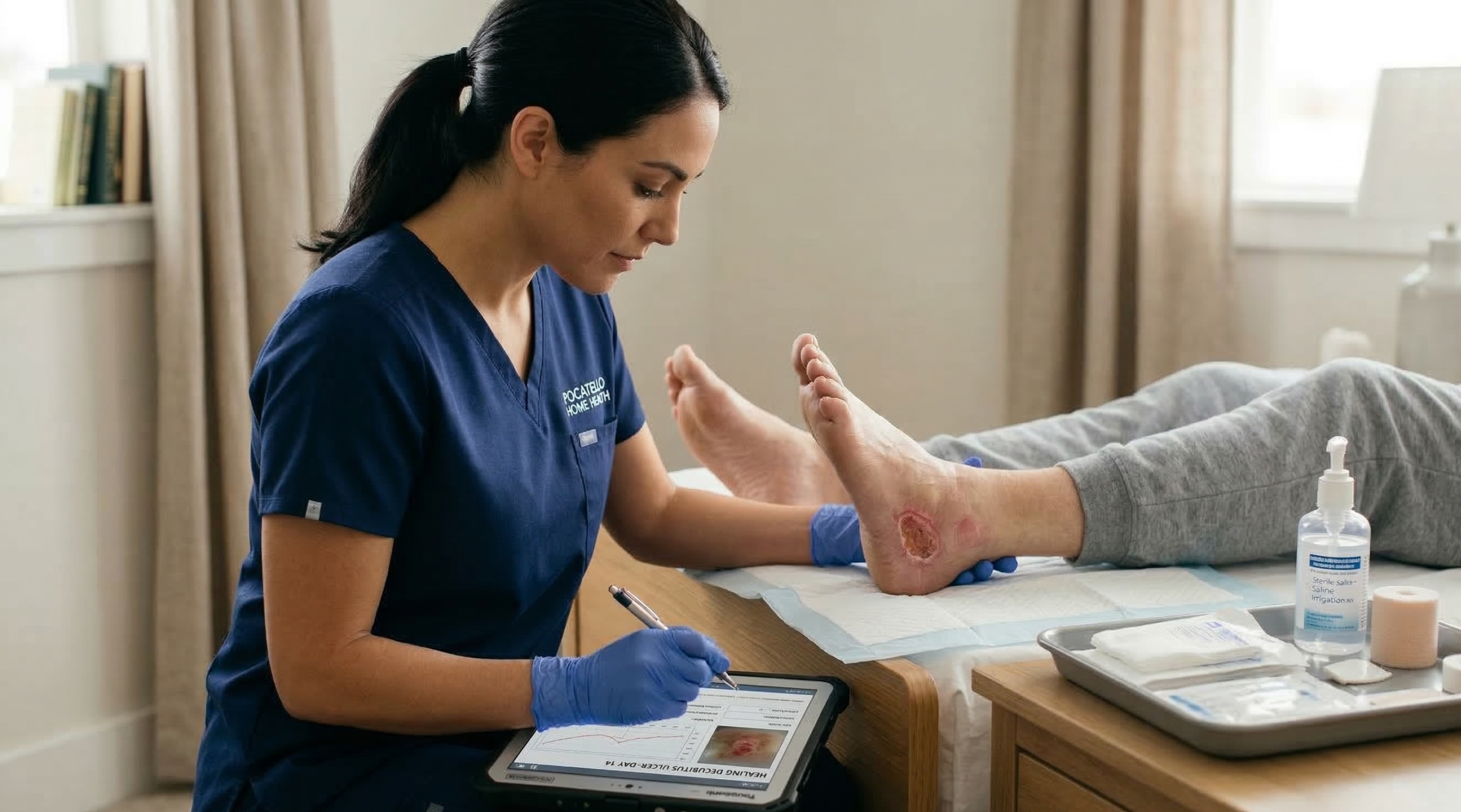
Pressure ulcers, sometimes called bedsores, can develop when mobility is limited and the same areas of skin bear weight for extended periods. They are among the most painful and preventable complications of illness and recovery.
If you or your loved one is spending long hours in bed or in a wheelchair, a home health nurse can help prevent pressure ulcers from forming and treat them carefully if they already have. This includes:
- Regular wound assessment and staging
- Specialized dressings that protect and promote healing
- Pressure relief techniques and repositioning guidance
- Hands-on education for caregivers and family members
No one should suffer from a wound that could have been prevented. Home health wound care helps make sure they don’t.
Diabetic Wounds
Living with diabetes means living with a heightened vigilance about your body, especially your feet. Circulation changes and nerve damage can make even a small wound slow to heal and quick to worsen.
The American Diabetes Association (diabetes.org) emphasizes that early wound treatment is one of the most important steps a diabetic patient can take to prevent serious complications, including infection or limb loss.
Skilled nursing wound care for diabetic patients focuses on:
- Monitoring wound progress at each visit
- Managing dressings with precision and care
- Teaching patients and families what to watch for between visits
- Identifying complications early, when they are still manageable
You’ve worked hard to manage your diabetes. Let a skilled nurse be part of your support team.
-
What a Home Health Wound Care Nurse Does
When a home health wound care nurse arrives at your door, they bring more than medical supplies. They bring expertise, calm, and a genuine commitment to your recovery.
On each visit, your nurse will:
- Assess the wound’s size, depth, and stage of healing
- Clean the wound and apply the appropriate dressing
- Use advanced wound treatments when needed
- Manage drainage systems carefully
- Watch for signs of infection or complications
- Answer your questions and educate you and your family
But perhaps more importantly, they listen. They know your name, your history, and your concerns. Over time, they become a trusted part of your recovery, someone you can call when something doesn’t look right, and someone who will tell you honestly how things are progressing.
Home health clinicians also coordinate with your physician, physical therapist, and other care providers. You are not navigating this alone; you have a team working together toward one goal: your safe recovery.
-
Warning Signs of Infection Families Should Watch For
⚠️ When to Call Your Nurse or Doctor Immediately
Even with excellent care, wounds can sometimes develop infections. Trust your instincts — if something looks or feels different, reach out.
Watch for these signs between nursing visits:
• Increased redness, warmth, or swelling around the wound
• Drainage with an unusual color or odor
• Fever or chills
• Pain that is increasing rather than improving
• Healing that seems to have slowed or stopped
If you notice any of these, contact your home health nurse or physician promptly.
Early attention prevents small problems from becoming serious ones.
Family members are often the first to notice a change. Your observations matter. Don’t hesitate to speak up. Your home health nurse wants to hear from you.
-
How Families Can Support Wound Healing at Home
Caring for a loved one during recovery is one of the most loving things a person can do. It can also be exhausting and uncertain. Knowing how to help and what is safe to do can make an enormous difference for both of you.
Here is how families can actively support wound care at home:
- Keep the wound area clean and protected between nursing visits
- Follow the dressing instructions your nurse demonstrates
- Encourage good nutrition, protein, vitamins, and hydration, all of which support tissue healing
- Help your loved one reposition or move safely if mobility is limited
- Watch the wound daily and note any changes to report at the next visit
You do not need to be a medical professional to make a meaningful difference. You just need to be present, attentive, and willing to ask questions. Your home health nurse is your partner; use them.
Healing is a team effort. And your role in that team matters more than you know.
-
Benefits of Receiving Wound Care at Home
There is something deeply human about healing in your own space. Surrounded by familiar faces, your own bed, your own routines, the body and the spirit both tend to respond better.
Here is what home health wound care offers that a hospital or clinic simply cannot:
Comfort and Emotional Recovery
Stress slows healing. When patients are comfortable and calm, their bodies can focus energy on recovery. Being at home in a space that feels safe and familiar supports that process in ways that are both real and measurable.
Personalized, Environment-Specific Care
A home health nurse sees your life as it actually is. They notice if the bathroom is difficult to navigate after surgery. They see the chair where you spend most of your day. That real-world context allows them to tailor care in ways that a short clinical visit never could.
Fewer Emergency Trips and Hospitalizations
Consistent professional monitoring catches complications early before they require an emergency room visit or readmission. For patients and families, that peace of mind is invaluable.
Education That Builds Confidence
Home health visits are also teaching visits. Every time your nurse changes a dressing or reviews warning signs, they are helping you and your family become more confident and capable partners in healing.
Many families are surprised to learn how much medical support can be provided outside the hospital. If you would like a clearer picture of what home health services include, you can read more in our complete guide to home health in Idaho Falls.
-
When to Talk With Your Doctor About Home Health Wound Care
You do not have to wait for a crisis to ask about home health wound care. In fact, the earlier you ask, the more smoothly the transition from hospital to home can go.
Consider asking your physician about home health wound care if your loved one:
- Is being discharged after surgery and still has an open wound or incision
- Has a chronic wound that has not been responding to treatment
- Is recovering from a pressure ulcer
- Has diabetes and a slow-healing foot wound
- Has limited mobility and cannot easily get to follow-up appointments
- Would benefit from having a nurse monitor their progress regularly
Asking is not a sign of weakness or worry; it is the right and caring thing to do.
For patients recovering from orthopedic procedures, wound healing is often only one part of the recovery process. You can read more about how therapy supports recovery in our guide to home health physical therapy after knee or hip replacement.
You Deserve to Heal Well
Wound healing asks a great deal of patients and families’ patience, vigilance, and trust in a process that can sometimes feel invisible. You are doing something brave by seeking care and information.
Home health wound care exists to make that journey safer and less lonely. With skilled nurses, a collaborative care team, and the comfort of your own home, healing becomes something you don’t have to face alone.
If you or someone you love is managing a wound that needs ongoing attention, talk to your physician about skilled nursing wound care at home. It may be exactly the support you’ve been looking for.
Ready to Learn More?
Eden Health serves patients and families in Idaho Falls and the surrounding area with compassionate, skilled home health wound care.
Explore more resources:
- Home Care After a Hospital Stay: edenhealthidahofalls.com/home-care-after-hospital-stay-guide/
- Home Health in Idaho Falls: edenhealthidahofalls.com/home-health-in-idaho-falls-guide/
- Physical Therapy After Joint Replacement: edenhealthidahofalls.com/home-health-physical-therapy-after-knee-or-hip-replacement/