
Home Care After a Hospital Stay: What Families Should Expect in the First 30 Days
Bringing a loved one home after a hospital stay is a meaningful milestone, but it can also feel overwhelming. Whether they’re recovering from surgery, illness, or a sudden health event, the first 30 days after discharge are critical.
This is the time when most complications, medication errors, and hospital readmissions occur. With the right plan, however, families can create a safe, supportive environment that promotes healing and confidence.
Families often benefit from professional support during recovery, especially when exploring home care services designed to support a safe transition from hospital to home.
At Eden Health, we believe knowledge empowers families. Just as we help families separate fact from myth in home care decisions and organize medications safely at home, this guide walks you through exactly what to expect during the first 30 days of home care after a hospital stay, week by week.
Quick Summary: Home Care After a Hospital Stay
The first month after hospital discharge is essential for recovery. Families should focus on medication management, fall prevention, therapy compliance, and emotional support. Proper home care after a hospital stay reduces readmissions, supports independence, and ensures a safer transition from hospital to home.
Why the First 30 Days After Discharge Matter Most
The transition from hospital to home is a major shift. Your loved one goes from 24/7 medical supervision to a home environment where family members become the primary support system.
Common challenges during this time include:
-
Missed or incorrect medications
-
Falls and mobility issues
-
Worsening or unnoticed symptoms
-
Difficulty with daily activities
-
Caregiver stress and burnout
Proper planning helps prevent these issues and supports a smoother recovery, much like the fall-prevention strategies and home safety steps outlined in our fall prevention guide.
What Should You Do Before Your Loved One Comes Home?
Hospital Discharge Preparation Checklist
Before leaving the hospital, make sure you understand the full care plan.
1. Clarify Medical Instructions
Ask the nurse or discharge planner:
-
What symptoms should we watch for?
-
What is the expected recovery timeline?
-
When are follow-up appointments scheduled?
2. Review Medications Carefully
Medication errors are one of the leading causes of hospital readmission.
Before discharge:
-
Create a written medication list
-
Understand each medication’s purpose, dosage, and timing
-
Ask about changes from pre-hospital routines
Organizing prescriptions properly reduces hospital readmissions. Our patient education resources offer helpful guidance on medication safety at home.
3. Determine Whether Home Health Is Needed
Home health is skilled medical care (nursing, wound care, physical therapy) ordered by a doctor.
Home care, by contrast, supports daily activities like bathing, meals, and mobility.
Understanding the difference between skilled medical care and daily support helps families make informed decisions about you can read more about this in our What is the difference between home health, home care, and hospice blog.
4. Prepare the Home Environment
-
Remove clutter and loose cords
-
Improve lighting in walkways
-
Install grab bars or non-slip mats
-
Ensure bed and chair heights are easy to use
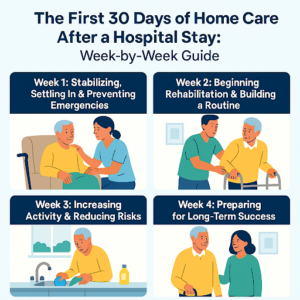
The First 30 Days at Home: A Week-by-Week Guide
Week 1: Stabilizing, Settling In & Preventing Emergencies
Primary goal: Safety, comfort, and strict adherence to medical instructions.
Top Priorities
-
Establish a consistent medication routine
-
Confirm home health visits (if ordered)
-
Monitor symptoms closely
-
Complete a home safety walkthrough
-
Set up mobility aids (walker, cane, shower chair)
What Home Health Visits May Include
-
Vital sign monitoring
-
Medication review
-
Wound care
-
Home safety evaluation
Family Daily Checklist (Week 1)
☑ Medications given correctly
☑ Meals and hydration monitored
☑ Pain levels tracked
☑ Bathroom safety ensured
☑ Fall risks removed daily
Week 2: Beginning Rehabilitation & Building a Routine
Recovery is not linear, your loved one may gain strength or feel exhausted. Patience is key.
Week 2: Beginning Rehabilitation & Building a Routine
Recovery is rarely linear. Your loved one may feel stronger one day and exhausted the next, this is normal.
Focus Areas
-
Physical or occupational therapy begins
-
Adjustments to the care plan
-
Increased focus on mobility
-
Monitoring emotional well-being
Encourage Safe Independence
-
Practice supervised walking
-
Perform gentle exercises
-
Resume personal care routines
These steps align with our in-home physical therapy guide, which helps improve confidence and prevent setbacks during home care after a hospital stay.
Week 3: Increasing Activity & Reducing Risks
Week three often brings improved confidence, and new risks.
Goals for This Week
-
Build endurance gradually
-
Maintain fall-prevention strategies
-
Introduce light household activities
-
Evaluate whether additional home care support is needed
Watch for “Recovery Overload”
-
New or worsening pain
-
Fatigue that doesn’t improve with rest
-
Trouble sleeping
-
Missed medications or mood changes
If these appear, contact your home health team promptly.
Week 4: Preparing for Long-Term Success
By week four, many individuals feel more capable, but ongoing support may still be essential.
Expected Improvements
-
Better balance and mobility
-
Reduced fall risk
-
Established medication routine
-
Increased confidence with daily activities
Reevaluate Care Needs
-
Continue home health if skilled services are required
-
Add non-medical home care for bathing, meals, or housekeeping
-
Consider respite care if caregiver fatigue is present
When Should You Call a Doctor?
Contact a medical professional immediately if you notice:
-
Fever or worsening pain
-
Shortness of breath
-
Confusion or dizziness
-
Persistent nausea or vomiting
-
Signs of wound infection
-
Any falls or near-falls
Prompt action during home care after a hospital stay can prevent serious complications.
Your 30-Day Home Care Success Checklist
Home Safety
☑ Clear walkways
☑ Non-slip bathroom mats
☑ Adequate lighting
☑ Mobility aids in place
Medications
☑ Organized pill system
☑ Written medication list
☑ Alarms or reminders set
Medical Care
☑ Follow-up appointments scheduled
☑ Home health visits completed
☑ Therapy exercises practiced daily
Support System
☑ Caregiver schedule created
☑ Respite options explored
☑ Emotional support available
Home Care After a Hospital Stay in Idaho Falls
Families in Idaho Falls often face limited post-discharge support. Eden Health provides trusted home care after a hospital stay throughout Idaho Falls and surrounding communities, helping families navigate recovery safely, confidently, and with dignity.
Final Thoughts: You Don’t Have to Navigate This Alone
The transition from hospital to home can feel overwhelming, but with a clear plan, the first 30 days become a pathway toward strength, safety, and independence.
Eden Health supports families through every stage of recovery, whether you need skilled home health care, non-medical home care, physical therapy, or caregiver support in Idaho.
FAQs: Home Care After a Hospital Stay
Q: What are common problems during the first 30 days at home after discharge?
A: During home care after a hospital stay, families often face medication errors, falls, and fatigue. A proactive care plan greatly reduces these risks.
Q: Is home care different from home health care?
A: Yes. Home health is skilled medical care prescribed by a doctor, while home care assists with daily living activities.
Q: How soon should physical therapy begin after coming home?
A: Ideally within the first 7 days. Early therapy improves mobility and reduces complications.
Q: What signs mean we should contact a doctor?
A: Fever, pain, confusion, breathing issues, or any falls should be addressed immediately.
Q: When should we consider ongoing home care?
A: If daily tasks remain difficult after four weeks or caregivers feel overwhelmed, non-medical home care can improve quality of life.
Helpful Resources for Families
Recovering at home after a hospital stay often involves many moving parts. These related articles can help patients and caregivers better understand available support and recovery options:
- What Home Health Services Really Do: A Complete Guide for Idaho Families
- Home Health Care After a Hospital Stay in Idaho: 8 Essential Things to Know
- Your First Home Health Visit in Idaho Falls: 7 Things to Expect
- Does Medicare Cover Home Health Care? 7 Things You Need to Know
- 10 Proven Tips on How to Choose a Home Care Agency That You Can Trust