
A stroke can change everything in a matter of moments. One minute, life is familiar and predictable, and the next, a person and their entire family are navigating a world that feels entirely different. The fear, the uncertainty, the questions that come flooding in during those first days after a medical event like this can feel truly overwhelming.
After emergency care and hospitalization, many patients are surprised, and sometimes even anxious, to learn that the real work of healing often begins at home. This is where home health after stroke becomes not just a medical service, but a lifeline for patients and the families who love them.
Skilled clinicians can provide therapy, nursing care, and compassionate guidance in the place patients feel safest; their own home. For families trying to understand what stroke recovery at home looks like, this guide is here to walk you through every step, ease your worries, and help you feel ready for the journey ahead.
Table of Contents
- Why Recovery Continues After Hospital Discharge
- What Is Home Health After Stroke?
- The Three Types of Stroke Therapy at Home
- What the First 30 Days of Stroke Recovery at Home Look Like
- Safety Modifications for Stroke Recovery at Home
- Caregiver Training and Family Support
- When Families Should Consider Home Health After Stroke
1. Why Home Health After Stroke Matters Beyond Hospital Discharge
Hospitals are extraordinary places when a crisis strikes. They stabilize, they monitor, they intervene when life is on the line. But hospitals are not designed for the slow, patient, deeply personal work of recovery. Once a stroke patient is medically stable, the most meaningful healing and restoring movement, rebuilding confidence, relearning daily tasks, happens somewhere else entirely.
According to the American Stroke Association, stroke rehabilitation can continue for months or even years, depending on the severity of the event. That timeline can sound daunting at first. But it’s also deeply hopeful. Because it means that progress is always possible, and that the effort patients and families put in each day genuinely matters.
Physicians recommend home health after a stroke once a patient is medically stable because recovery in a real-world environment is simply more effective. When a physical therapist watches a patient navigate their actual hallway, or an occupational therapist sees the bathroom they use every morning, care becomes specific, practical, and deeply personal. Clinicians can identify the real obstacles, reduce fall risks that only become visible at home, and teach skills that translate directly into daily life.
For families, knowing that professional support is coming to the home, and that their loved one won’t have to manage the exhaustion of traveling to appointments while still fragile, can be an enormous relief.
2. What Is Home Health After Stroke?
Home health after stroke is a physician-ordered healthcare service that brings a coordinated team of skilled clinicians directly to a patient’s home. It is not simply a visiting nurse checking in; it is a full rehabilitation program tailored to each patient’s unique needs, goals, and living environment.
A home health team following a stroke may include physical therapists, occupational therapists, speech therapists, skilled nurses, and home health aides working in close collaboration with the patient’s physician. Together, they create a personalized plan of care built around what matters most to the patient, whether that’s walking to the mailbox independently, returning to cooking family meals, or simply feeling safe in their own home again.
To learn more about what home health services look like in our community, visit our comprehensive home health guide for Idaho Falls.
3. The Three Types of Stroke Therapy at Home
Stroke can affect the brain and body in very different ways for different people. One person may struggle primarily with walking and balance, while another finds that their words no longer come out the way they intend, or that buttoning a shirt has become an unexpected challenge. Home health stroke therapy is designed to address all of these dimensions through three specialized disciplines, each one complementing the others.
Physical Therapy: Rebuilding Strength and Movement
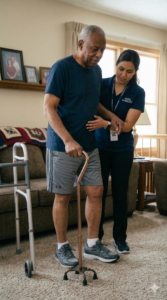
After a stroke, many patients experience muscle weakness, difficulty walking, reduced coordination, or a significantly elevated risk of falling. Physical therapy is the cornerstone of addressing these challenges, and doing so in a home setting makes the work feel real and immediately meaningful.
A physical therapist works alongside the patient to restore strength, improve balance, and rebuild confidence to move safely through their own home. Exercises are designed around real goals: walking to the kitchen, climbing the front porch steps, and getting up from a favorite chair without assistance. Therapists may also recommend assistive devices such as walkers or canes and will teach patients and caregivers how to use them safely.
Occupational Therapy: Reclaiming Daily Independence
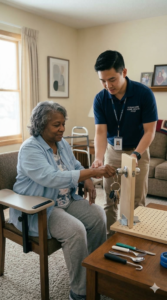
There is something quietly profound about the moment a patient realizes they can get dressed on their own again, or that they can safely prepare a simple meal without help. Occupational therapy after stroke focuses on exactly these kinds of moments — the everyday tasks that most people take for granted, but that can become significant hurdles after a neurological event.
Occupational therapists work with patients on dressing, bathing, cooking, medication management, and using the bathroom safely. They introduce adaptive techniques and tools that make these tasks achievable, and they take a thoughtful look at the home environment to recommend modifications that support independence and reduce the risk of injury.
Speech Therapy: Restoring Voice, Language, and Connection
For many stroke survivors, one of the most distressing effects is the sudden difficulty in communicating. Words that once came easily may feel just out of reach. A thought forms clearly in the mind, but doesn’t translate into speech the way it used to. This experience can feel profoundly isolating, not just for the patient, but for the family members who want desperately to connect with them.
Speech therapists who specialize in home health stroke therapy work patiently and skillfully with patients on speaking, understanding language, memory, cognitive skills, and swallowing. Progress may feel slow at first, but even small improvements in communication can have an enormous impact on a patient’s emotional well-being and sense of self.
4. What the First 30 Days of Stroke Recovery at Home Look Like
While many families want a clear timeline, stroke recovery rarely follows a predictable schedule. The examples below illustrate how home health care may progress during the first month, but each patient’s journey will look different.
The first month after returning home is often the most emotionally and physically intense phase of the entire recovery journey. Patients may feel moments of progress followed by moments of frustration. Families may feel uncertain about what to expect, what to do, and whether they are doing enough. This is completely normal, and it is exactly why having professional support during this critical window matters so much.
Week 1: Safety, Settling In, and First Assessments
During the first week of home health services, the primary focus is safety, stabilization, and understanding the patient’s unique needs after a stroke. The home health team performs a comprehensive home safety assessment to identify fall risks and ensure the environment supports recovery.
Clinicians also review medications, evaluate mobility and cognitive status, and complete initial therapy assessments. Caregivers receive instruction on safe transfers, positioning, and how to assist with daily activities.
Because stroke recovery varies widely depending on the type and severity of stroke, hospital treatment outcomes, and the patient’s pre-existing health conditions, the first week is primarily about gathering information and creating an individualized care plan rather than expecting immediate functional improvement.
Weeks 2–3: Establishing a Routine and Targeted Rehabilitation
As therapy progresses, patients begin working toward personalized rehabilitation goals. Depending on the individual’s condition, therapy may focus on regaining strength, improving balance, practicing safe transfers, restoring coordination, or relearning everyday tasks.
For some patients, this period may involve gradual increases in walking distance or greater independence with daily activities. For others, progress may center on sitting balance, cognitive tasks, or safe swallowing.
Stroke recovery rarely follows a predictable timeline, but consistent therapy and repetition often help patients build confidence and functional ability over time. Families may begin to notice meaningful improvements during this stage, though progress can occur at very different rates from one person to another.
Week 4: Reassessment and Planning the Next Phase of Care
Around the one-month mark, the home health team reassesses the patient’s progress and updates therapy goals based on their current abilities and needs. At this point, some patients may transition to outpatient rehabilitation, while others may benefit from continued home health services.
Stroke recovery is a highly individualized journey. Progress depends on many factors, including the patient’s medical history, the severity and location of the stroke, and their support system at home. The care plan is continuously adjusted to reflect the patient’s progress, goals, and overall health.
For more information on what to expect after a hospital stay, read our guide to home care after a hospital stay.
5. Safety Modifications That Make Stroke Recovery at Home Possible
One of the most important and often overlooked parts of home health after a stroke is ensuring the home itself supports recovery. A house that was perfectly comfortable before a stroke can become a collection of hidden hazards when a patient’s balance, strength, and coordination are still being rebuilt.
Home health clinicians are trained to recognize these hazards and collaborate with families on practical, often simple modifications. Installing grab bars in bathrooms, removing loose rugs that could cause a shuffle, enhancing lighting in hallways and stairwells, adding non-slip mats in the shower, and rearranging furniture to create clear, wide walking paths are all changes that can immediately improve safety and confidence.
Fall prevention is a crucial aspect of stroke recovery at home. A fall during the early recovery phase can set back weeks of progress and cause new fears that persist long after the physical injury heals. Creating a safe home environment is one of the most caring and practical steps a family can take for a loved one returning home after a stroke.
6. Caregiver Training and the Quiet Courage of Family Support
Caregivers, whether spouses, adult children, siblings, or close friends, are often the unsung heroes of stroke recovery. They are there in the moments between therapy visits, during the middle of the night when anxiety runs high, and through the long weeks when progress feels slow. The love they bring to this role is irreplaceable.
Home health clinicians recognize this, and a significant part of home health after stroke involves educating and supporting caregivers directly. Clinicians teach families how to assist safely with transfers, such as moving a patient from bed to chair, without causing injury to either person. They explain how to monitor for concerning symptoms, how to encourage therapy exercises between visits, and how to support mobility and activity in ways that reinforce rather than undermine independence.
Just as importantly, caregivers receive permission to ask questions, voice fears, and acknowledge when they feel overwhelmed. Stroke recovery places a great deal of strain on families. The more informed and supported caregivers feel, the more confidently they can show up for the person counting on them.
Emotional support is not a soft extra in stroke recovery; it is clinical medicine. Research consistently shows that patients who feel encouraged, seen, and emotionally supported by their loved ones tend to recover more fully and more quickly. The quiet encouragement offered by a family member can be just as therapeutic as any exercise.
7. When Families Should Consider Home Health After Stroke
If you are currently navigating the transition from hospital to home with a loved one who has experienced a stroke, you may be wondering whether home health services are the right next step. Physicians typically recommend home health after a stroke when a patient has recently been discharged from the hospital, requires skilled therapy but cannot easily travel to outpatient appointments, needs nursing care or ongoing monitoring, or is in the process of rebuilding strength and independence after a neurological event.
The right time to have this conversation is early, ideally before discharge, when the hospital care team and a home health agency can work together to create a seamless transition plan. The gap between hospital and full recovery does not have to feel like falling off a cliff. With the right support in place, it can feel like the next step on a path that is already being walked, with skilled professionals at the patient’s side.
For patients recovering from other procedures as well, our team also provides specialized care for home health physical therapy after knee or hip replacement.
Supporting Recovery at Home — One Day at a Time
Recovering from a stroke takes patience, persistence, and the kind of sustained hope that is often easier to maintain when you are not facing the journey alone. Home health after stroke is not simply a clinical service; it is a partnership between skilled professionals and the people who love the patient most, all working toward the same goal: a life rebuilt, confidence restored, and independence reclaimed.
Progress will not always be linear. There will be days that feel harder than others. But there will also be mornings when a patient walks a little farther, says a word a little more clearly, or buttons their own shirt without assistance, and those moments carry an entire family forward.
If you or a loved one recently experienced a stroke, talk to your doctor about whether home health services could be the next step. You don’t have to go through this alone, and with the right support, stroke recovery at home can become one of the most empowering parts of a challenging journey.