
Home health services can play a meaningful role in supporting patients with diabetes who are already receiving skilled care at home. For many people newly diagnosed with type 2 diabetes, the condition can feel overwhelming, less like a manageable diagnosis and more like a life-altering turning point. After the clinic visit ends, patients are often left alone to translate complex instructions into daily routines in their own kitchens, living rooms, and neighborhoods. For those who qualify for home health services, skilled clinicians can help bridge that gap directly in the home.
This article explains how home health supports diabetes for patients who are already receiving skilled care at home. Typically, home health services bring skilled care and coaching into the place where habits actually form. By meeting patients where they live, home health clinicians help turn clinical guidance into practical, sustainable actions, supporting confidence, independence, and long-term health.
How Home Health Supports Diabetes Between the Clinic and the Kitchen
Medical advice often falters not because people don’t care, but because implementation is hard. Being told to “eat healthier,” “move more,” or “check your blood sugar regularly” can feel vague and unrealistic without hands-on support.
Home health for diabetes focuses on this exact gap. Instead of abstract recommendations, clinicians work alongside patients in real environments, reviewing pantry items, discussing meal timing, and identifying realistic activity options within the home and neighborhood. This practical approach transforms diabetes management from a list of instructions into a livable routine.
In-home coaching also reinforces mindfulness around daily choices. Small adjustments, like pairing carbohydrates with protein, setting reminders for glucose checks, or rearranging the kitchen for easier access to healthy foods, add up to meaningful improvements over time.
For an overview of what skilled care looks like and how home health services support daily living at home, see Home Health 101: What Skilled Care at Home Includes (Nursing, Therapy, and More).
Why Home Health for Diabetes Works Better Than Generic Advice
Generic diet plans and one-size-fits-all guidance often ignore culture, finances, mobility limitations, and local food access. Home health clinicians understand that successful diabetes care must fit into a person’s life, not the other way around.
Because care is delivered at home, clinicians can tailor education to the patient’s cultural traditions and daily realities. Rather than eliminating familiar foods, home health coaching emphasizes moderation, portion awareness, and healthier preparation methods. This respectful, individualized approach helps patients sustain changes without feeling deprived or judged.
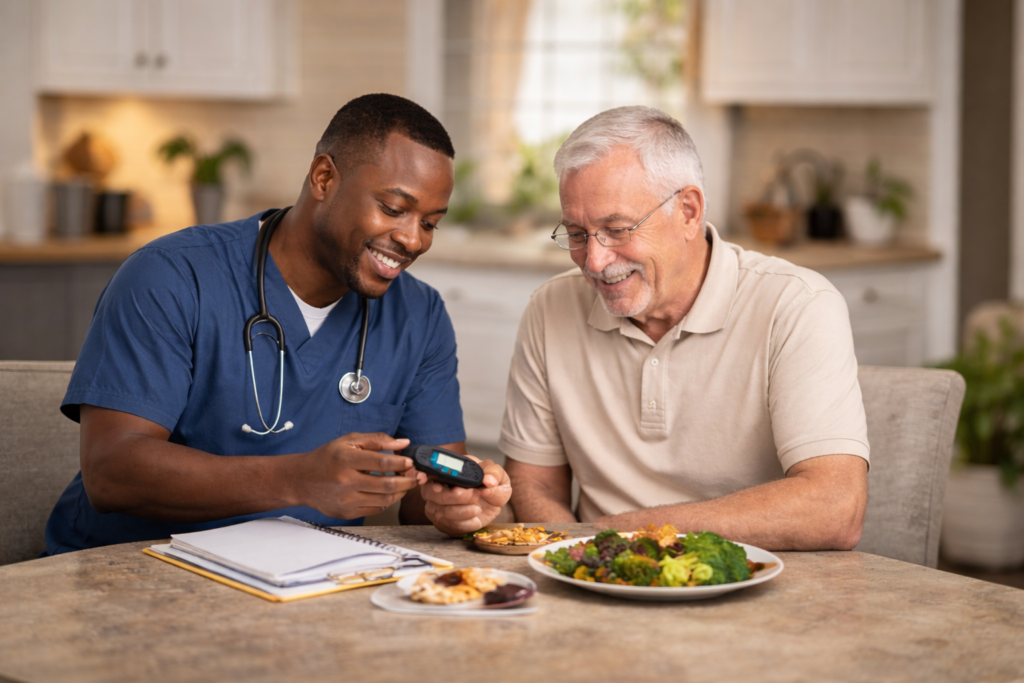
Patients also tend to feel more relaxed and open in their own homes. This comfort allows for honest conversations about challenges, fears, and emotional stress, key factors in long-term diabetes management.
Diabetes-related nerve changes can increase fall risk. For practical home safety tips, check out 10 Proven Ways to Prevent Falls at Home and Stay Safe Every Day. Staying safe at home is an essential part of successful diabetes self-management.
The Real Impact of Small Changes With Home Health for Diabetes
Consistent, supported habit changes can have a powerful effect. Research shows that modifying key diabetes risk factors, even years after diagnosis, can significantly extend life expectancy and improve quality of life.
Studies of health coaching interventions have found meaningful improvements in diabetes-related measures, including hemoglobin A1c levels. While coaching alone isn’t a cure-all, it plays a critical role in glycemic control when combined with physician-directed care.
Home health support for diabetes helps patients focus on what they can control each day: meals, movement, medication routines, and monitoring, while staying connected to their broader care team.
Home Health Eligibility for Diabetes: What Patients Should Know
Home health services are not available to everyone managing diabetes. To qualify, a patient must be considered homebound — meaning that leaving home requires considerable effort due to illness, injury, or functional limitation — and must require skilled care, such as skilled nursing, physical therapy, or another qualifying service ordered by a physician.
Diabetes alone typically does not qualify a patient for home health. However, for patients who already meet these criteria, diabetes education and management may be included as part of their plan of care. If you’re unsure whether you or a loved one qualifies, speak with your primary care physician, who must order and certify the need for home health services.
What In-Home Diabetes Care Looks Like Day to Day
Home health diabetes care is structured yet flexible, providing what many patients need most: steady support and accountability. Common areas of focus include:
Medication Management
Managing diabetes medications can be complex, especially when multiple prescriptions are involved. Home health clinicians help organize medications, review dosing schedules, and reinforce adherence strategies, reducing the risk of missed doses or errors.
Blood Sugar Monitoring
Understanding how daily choices affect blood glucose is essential. In-home coaching supports proper monitoring techniques and helps patients recognize patterns tied to meals, activity, stress, or illness. This education empowers patients to have more informed conversations with their primary care provider.
Diabetes Foot Care at Home
Nerve damage related to diabetes can reduce sensation in the feet, increasing the risk of unnoticed cuts or infections. Home health clinicians teach routine foot inspections and basic preventive care to help protect long-term mobility and independence.
Movement and Physical Activity
Physical activity doesn’t have to mean a gym membership. Home health for diabetes often emphasizes simple, safe movement, such as walking routines or gentle strength exercises, that fit a patient’s ability level and home environment. Even modest increases in activity can support better glucose control.
Fall Risk Prevention
Diabetes-related nerve changes can affect balance. Home health clinicians assess fall risks in the home and recommend practical safety adjustments so patients can move confidently and safely.
Emotional Support and Diabetes Distress
Living with diabetes is not only physically demanding, it can also be emotionally exhausting. Many people experience diabetes distress, anxiety, or depression that interferes with self-care.
Home health clinicians build ongoing relationships with patients, offering encouragement, education, and emotional reassurance. This supportive connection helps patients feel less alone and more motivated to engage in daily care tasks. While home health does not replace mental health treatment, it provides an important layer of human support that complements medical care.
How Home Health for Diabetes Fits Into a Larger Care Plan
It’s important to understand that home health for diabetes works best as part of a coordinated care plan. Home health clinicians collaborate with physicians and other providers to reinforce treatment goals, monitor progress, and flag concerns early.
This team-based approach helps prevent complications and may reduce the risk of avoidable hospitalizations. For patients managing multiple chronic conditions, home health services offer continuity and clarity during a complex health journey.
To learn more about what skilled care at home includes, explore our overview of home health services and how they support chronic condition management.
Trusted Guidance From National Health Organizations
National health organizations consistently emphasize the importance of daily routines and lifestyle support in diabetes management. According to the American Diabetes Association, sustainable habit changes and consistent monitoring are key components of long-term blood sugar control. Educational resources from the Centers for Disease Control and Prevention (CDC) also highlight the value of ongoing support for people living with diabetes.
Home health aligns with these principles by providing education and reinforcement where habits are formed at home.
Who May Benefit Most From Home Health for Diabetes
Home health diabetes services may be especially helpful for individuals who:
- Are newly diagnosed and feeling overwhelmed
- Have difficulty managing medications or monitoring routines
- Are recovering from a diabetes-related hospitalization
- Experience mobility limitations or fall risk
- Need additional education or confidence to manage daily care
To receive home health services, patients must meet specific eligibility criteria, including being considered homebound and requiring skilled care. Diabetes management may be part of a home health plan of care when these criteria are met, but a diabetes diagnosis alone does not automatically qualify someone for services. A physician must order and certify the need for home health care. Individuals should consult their primary care provider to determine what level of care is appropriate for their specific needs.
Living Well With Diabetes at Home
Diabetes management is not a one-time decision; it’s a daily practice. “While clinical medicine provides the foundation, home health support for diabetes brings that guidance into real life. Through personalized education, practical coaching, and compassionate support, home health services help people move from simply coping with diabetes to living well with it.
If you or a loved one is navigating diabetes, consider how in-home support might make daily care more manageable. Always consult your primary care physician to discuss options and determine what approach is right for you.

Learn More About Home Health Support
If you’d like to learn more about how Eden Health supports people living with diabetes through skilled care at home, we’re here to help. Our team can answer questions, explain what services may be available, and work with your physician to determine whether home health is the right next step.
For more information, contact us to speak with a member of our care team.
About the Author:
Content developed by Eden Health’s interdisciplinary team of nurses, therapists, and healthcare professionals. Articles are created using evidence-based guidelines and reviewed for clinical accuracy before publication. This information is educational and not a substitute for professional medical advice.