A daughter walks out of Eastern Idaho Regional Medical Center at 4:40 p.m. with a folder in one hand and her mom’s walker in the other. The discharge nurse has explained the new medications, the follow-up appointments, the wound care steps, and the warning signs that mean “go back to the ER.”
But in the parking lot, one thought gets louder than all the rest: How am I supposed to keep Mom safe tonight?
That is often when families start searching for Idaho Falls home health care. Not because they planned for it. Because a hospital discharge, surgery, illness, injury, or chronic condition flare-up just turned into a family decision overnight.
Compassionate Idaho Falls Home Health Care, Right Where You Live
Home health is not just “someone coming by to check in.” When it is ordered by a physician, home health can bring skilled nursing, therapy, medication education, wound care, and recovery planning into the place where the patient feels most like themselves.
For Idaho Falls families, that matters.
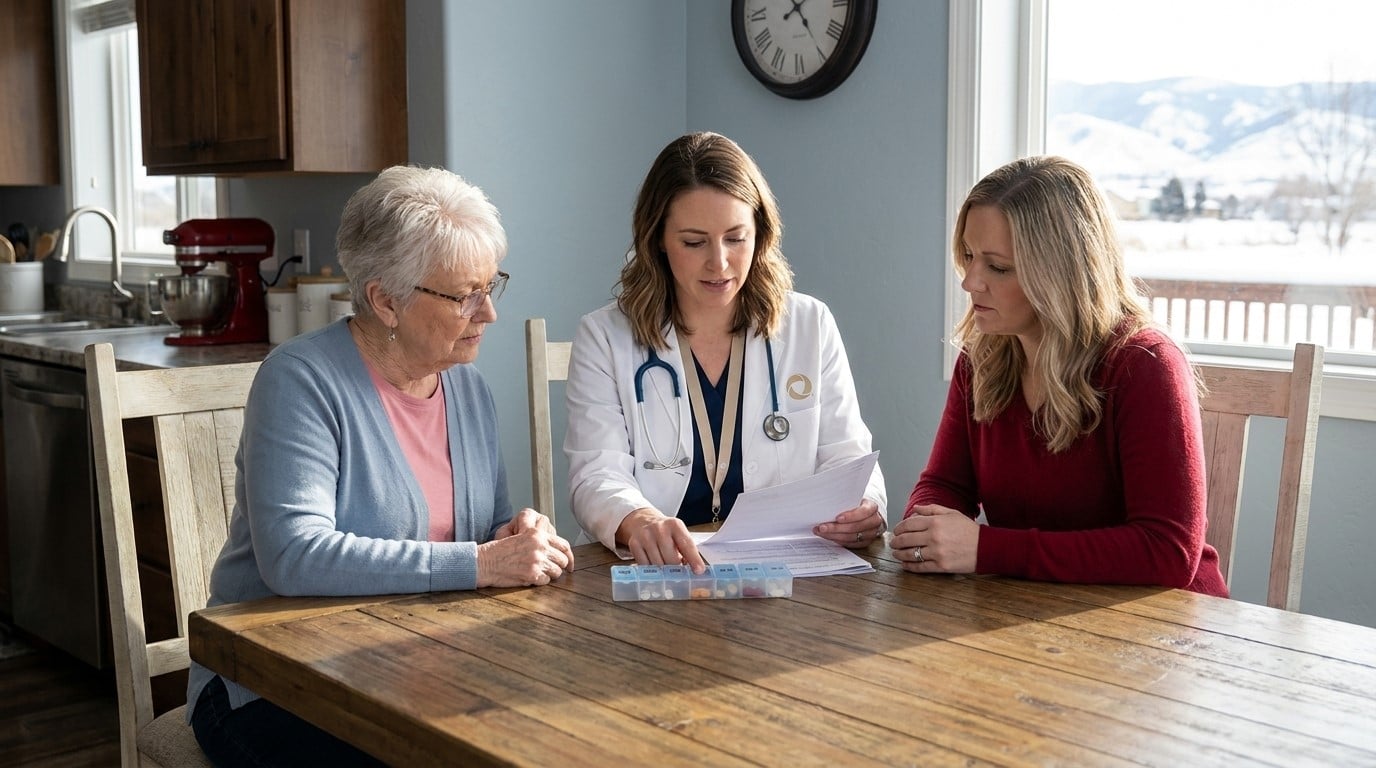
A person may be medically ready to leave Idaho Falls Community Hospital, Eastern Idaho Regional Medical Center, a rehab stay, or a local clinic. But “ready to discharge” does not always mean “ready to manage alone.” The first few days at home are when families notice the gaps: the bathroom feels farther away, the new pills look too similar, the oxygen tubing catches on the rug, and Mom says she is “fine” even though she has barely eaten.
Eden Health helps bring connected care home for patients across Idaho Falls and nearby communities. The team provides physician-directed home health, hospice, and personal care with a focus on dignity, comfort, safety, and family confidence.
Call the local Eden Health team at 208-417-7306 or request a free in-home assessment. Eden Health serves Idaho Falls and nearby areas, including Ammon, Iona, Ucon, Shelley, Firth, Bonneville County, and neighborhoods near the Snake River, downtown Idaho Falls, and ZIP codes 83401, 83402, 83404, and 83406.
When Home Health Care Helps Most
The hardest part is not always the medical diagnosis.
It is the first night back home.
You may be standing in the hallway at 10:30 p.m., trying to remember which medication was stopped and which one was doubled. Your parent may be weaker than they were before the hospital stay. The shower may suddenly feel risky. The stairs may feel impossible. If you live outside Idaho Falls, the fear can be even worse because every missed call feels urgent.
Home health helps most when the patient needs skilled support but wants to recover at home. That may be after surgery, pneumonia, a fall, a wound, a new diagnosis, or a flare-up of a chronic condition such as heart failure, COPD, diabetes, or kidney disease.
The goal is simple: help the patient heal safely at home and help the family stop guessing.
Recovering After a Hospital Stay, Surgery, Illness, or Injury
After a hospital discharge, many families assume recovery will be clear once they get home. Then reality sets in.
The discharge papers mention “monitor for signs of infection.” But what counts as a warning sign? A therapist recommends exercises. But how hard should they be? A medication list changes. But what happens to the old bottles still sitting in the cabinet?
Eden Health’s home health team can help bridge that gap. A skilled nurse may assess symptoms, review medications, teach wound care, and coordinate with the physician. A physical therapist may help rebuild strength and balance. An occupational therapist may teach safer ways to bathe, dress, cook, and move around the home.
If your family is planning for home care after hospital, the right support can turn a stressful discharge into a safer recovery plan.
Managing Chronic Conditions Safely at Home
Chronic conditions do not always fail all at once. They often change in small ways.
A little more swelling. A few pounds of weight gain. More shortness of breath walking from the bedroom to the kitchen. Blood sugar readings that keep drifting out of range.
By the time a family sees the pattern, the patient may already be headed back to urgent care or the ER. Home health can help by teaching the patient and family what to watch, when to call, and how to follow the care plan at home.
For higher-risk patients, remote patient monitoring can add another layer of support between visits — catching changes the care team can act on sooner. More on that below.
Helping Families Avoid Preventable ER Visits and Readmissions
A return trip to the ER is not just inconvenient. It can be frightening and costly. It can also slow recovery.
The Centers for Medicare & Medicaid Services tracks hospital readmissions because the period after discharge is a known risk window. Families feel that risk in daily life. One missed medication, one fall, one wound that changes over the weekend, and the whole plan can unravel.
Home health helps reduce that risk by putting skilled eyes on the patient at home. The nurse or therapist can see the actual setting: the loose rug near the recliner, the low toilet seat, the long walk to the bedroom, the pill bottles from three different doctors.
That home view matters.
A clinic visit shows how someone is doing for 20 minutes in an exam room. A home health visit shows how they are living, moving, eating, healing, and coping where recovery actually happens.
Home Health Services Available in Idaho Falls
Eden Health provides home-based healthcare across Southeast Idaho, including home health, hospice care, and personal care. For patients who qualify for home health, services are typically physician-directed. That means a doctor or qualified provider is involved in ordering and overseeing the plan of care.
Home health is built around skilled needs. “Skilled” means care that must be provided by licensed or trained professionals, such as nurses or therapists. The care plan depends on the patient’s diagnosis, goals, home setting, and physician orders.
Skilled Nursing at Home
A skilled nurse can help families understand what is changing and what to do next.
That may include checking vital signs, assessing pain, reviewing medications, caring for wounds, teaching infection warning signs, and helping manage conditions like diabetes, heart failure, COPD, or post-surgical recovery.
For many families, skilled nursing is the service that brings the most relief. The nurse can answer the question families keep asking themselves: “Is this normal, or should we call the doctor?”
That answer can prevent delay. It can also prevent panic.
Physical, Occupational, and Speech Therapy at Home
Therapy at home is different from therapy in a clinic because the therapist can see the real obstacles.
The hallway may be narrow. The favorite chair may be too low. The patient may be strong enough in a therapy gym but not steady enough on the front steps in February. That is why home-based therapy can be so practical.
Physical therapy often focuses on strength, walking, balance, and fall prevention. Occupational therapy helps with daily tasks such as bathing, dressing, cooking, and using adaptive tools. Speech therapy can support swallowing, communication, memory strategies, and cognitive recovery after certain illnesses or injuries.
Families comparing the best therapy services should look for care that connects goals to real life. “Walk 100 feet” is useful. “Walk safely from the bedroom to the bathroom at night” is better.
Medication Management, Wound Care, and Chronic Disease Support
Medication changes are one of the most common stress points after a discharge.
A patient may come home with new prescriptions, stopped prescriptions, changed doses, and old bottles still in the medicine cabinet. If several providers are involved, confusion can build fast.
A home health nurse can help review the medication plan, teach safe use, and watch for side effects or signs the plan needs attention. For wounds, the nurse can provide care based on physician orders and teach the family what healing should look like.
For chronic disease support, Eden Health helps patients and families understand symptoms, daily routines, and when to call for help. Education is not a side task. It is part of helping people stay safer at home.
Remote Patient Monitoring for Higher-Risk Patients
Some patients need more than scheduled visits.
If a patient has heart failure, COPD, high blood pressure, or another condition that can change quickly, remote patient monitoring may help the care team catch problems earlier. A sudden weight gain, lower oxygen level, or blood pressure change can be a clue.
Remote monitoring gives families more confidence between visits. It also gives the care team more information to share with physicians when needed.
Personal Care and Hospice Support When Needs Change
Needs can change during recovery.
Some patients start with home health after a hospital stay and later need non-medical help with bathing, grooming, meals, or light daily support. Others may face a serious illness where comfort, symptom relief, and family support become the focus.
Eden Health offers a continuum of care that includes home health, personal care, and hospice. That helps families avoid starting over with a new team every time needs shift.
A Local Care Team Serving Idaho Falls Families
Local care is not a small detail. It changes the experience.
If you live near downtown Idaho Falls, along the Snake River, in Ammon, Iona, Ucon, Shelley, Firth, or another Bonneville County community, you want a team that understands the area. You want someone who knows the local hospitals, clinics, discharge process, winter roads, and the real driving time between visits.
Eden Health serves Idaho Falls and Southeast Idaho with home-based healthcare right where patients live. Families in nearby regions can also learn more about home health southeast idaho services, including related care pages for home health care Pocatello and Rexburg home health.
Coordination With Idaho Falls Hospitals, Clinics, and Physicians
Good home health does not work in isolation.
The home health team may coordinate with discharge planners, physician offices, rehab providers, and local care partners. In Idaho Falls, that may include care transitions from Eastern Idaho Regional Medical Center, Idaho Falls Community Hospital, local clinics, specialists, or primary care offices.
That coordination helps keep everyone pointed in the same direction. The patient knows the plan. The family knows who to call. The physician receives updates when needed.
Why Response Time and Caregiver Continuity Matter
When a family is worried, waiting feels longer.
A local team can often respond with better awareness of the area and the patient’s setting. Caregiver continuity also matters. Seeing familiar faces builds trust, especially for older adults who feel uneasy after a hospital stay.
The home itself tells a story. A clinician who has been there before may remember that the patient keeps medications near the recliner, that the back steps are steep, or that the daughter joins visits by phone from another city. Those details can make care feel more personal and more effective.
What to Expect From the First Home Health Visit
Families often delay calling because they are not sure what happens next.
They picture paperwork, insurance confusion, or a stranger taking over. The real process should feel more supportive than that. Eden Health’s role is to help you understand the options, confirm what is needed, and build a plan around the patient’s goals.
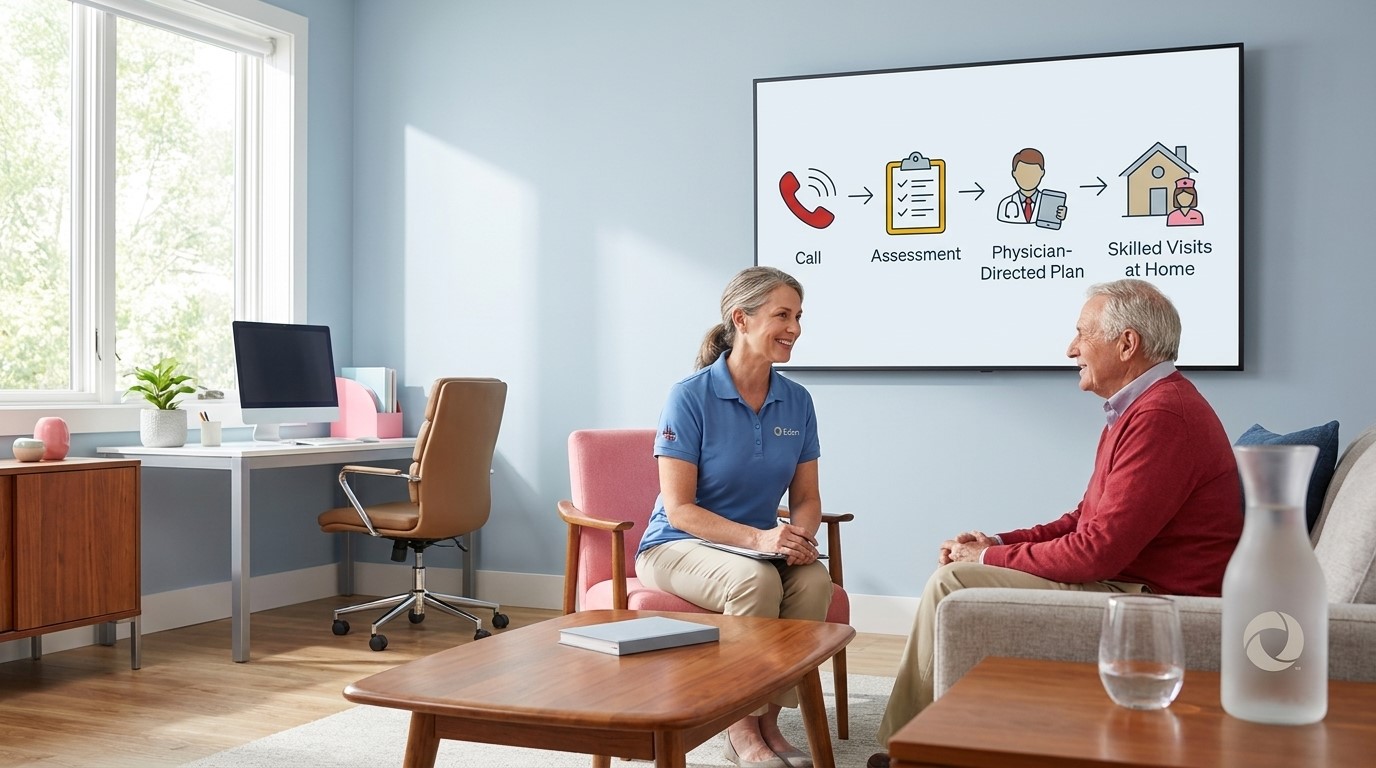
The process usually starts with a conversation.
First, you call the local Eden Health team or request a free in-home assessment. This intake helps identify the patient’s needs, recent health changes, hospital or clinic involvement, and safety concerns at home.
Next, home health generally requires physician direction. That means Eden Health may help coordinate with the doctor or qualified provider to confirm orders and build the care plan.
Then the first skilled visit takes place. A nurse or therapist assesses the patient, reviews the home setting, teaches key safety steps, and starts care based on the plan. Family members can ask questions during the visit, including what to watch for and when to call.
As care continues, the team tracks progress. Therapy goals may change as strength improves. Nursing needs may decrease as wounds heal or symptoms stabilize. When the patient no longer needs skilled home health, Eden Health can help plan the next step, whether that means discharge from home health, added personal care, or another level of support.
This journey matters because families need more than tasks. They need confidence.
Is Home Health Covered by Medicare or Insurance?
Cost worries stop many families from calling. That delay can make things harder.
Medicare.gov explains that eligible beneficiaries may qualify for covered home health services when certain requirements are met. In general, the patient must be under the care of a doctor or allowed provider, need intermittent skilled care, and meet Medicare’s home health eligibility rules.
For eligible Medicare patients, covered home health services may come at little or no out-of-pocket cost. Coverage can include part-time skilled nursing, therapy, medical social services, and certain home health aide services when tied to the skilled plan of care.
Private insurance plans vary. Medicaid and Medicare Advantage plans may have their own rules, networks, authorizations, and documentation needs.
The most important step is not to guess.
If you are unsure, call Eden Health before delaying care. The local team can help you understand the difference between covered home health and private-duty personal care. You can also review the Medicare guidelines for home health for more detail.
How Coverage Differs From Private-Duty Personal Care
This is where families often get confused.
Home health is usually skilled, physician-directed care. It may include nursing, therapy, wound care, medication teaching, and recovery support. It is tied to medical need and eligibility rules.
Private-duty personal care is different. It helps with daily living tasks such as bathing, dressing, meal support, companionship, and light household help. It may be paid privately or through certain programs, depending on eligibility.
Both can be valuable. They just solve different problems.
Why Idaho Falls Families Choose Eden Health
Trust matters when someone is coming into your home.
Eden Health’s message is simple: best-in-class home-based healthcare right where you live. For Idaho Falls families, that means care that is local, values-driven, and focused on comfort during stressful transitions.
Eden Health is recognized in its own brand proof as the highest average Medicare-rated agency serving Southeastern Idaho since 2018. Families should still review current quality information, ask questions, and confirm service fit. But that track record is a meaningful trust signal for people comparing local options.
Eden Health is also 100% employee-owned and operated. That matters because employee ownership can shape how a team shows up. When caregivers are part of the organization’s future, the work can feel more personal.
The brand’s promise, “compassionate care from Eden’s family to yours,” fits the moment families are in. They are not shopping for a commodity. They are inviting care into a living room, bedroom, kitchen, or hallway during a vulnerable time.
Eden Health also describes itself as community-conscious, with a commitment to giving back locally through school team support and wellness programs. That local connection helps the page pass a simple test: would an Idaho Falls family believe this team knows our community?

Home Health vs. Home Care vs. Hospice: Which Support Do You Need?
Many families use “home health,” “home care,” and “hospice” as if they mean the same thing — but they do not. Home health is skilled, physician-directed medical care focused on recovery. Personal care, sometimes called home care, is non-medical help with daily living, like bathing, dressing, or meals. Hospice shifts the focus to comfort and dignity when curative treatment is no longer the goal.
You do not have to choose alone. Eden Health offers all three, so the team can help match the right level of support to the patient’s needs now.
If your biggest concern is falls, start with safety. A home health clinician or therapist can help identify risks, and families can also use an elderly home safety checklist to spot common hazards before an accident happens.
Local Trust Signals for This Idaho Falls Page
A strong local healthcare page should show real local trust, not vague claims.
For Eden Health Idaho Falls, the page should include visible NAP details near the top and bottom: business name, local address, phone number, and service area. Because no approved phone number or address was provided in this brief, use compliance-approved placeholders until the final location data is verified:
Eden Health Idaho Falls
Address:
Phone: 208-417-7306
Service area: Idaho Falls, Ammon, Iona, Ucon, Shelley, Firth, Bonneville County, and nearby Southeast Idaho communities
Add an embedded Google Map centered on Idaho Falls or the verified Eden Health Idaho Falls office location. This supports local users and helps reinforce service-area relevance.
The page should also include a real review or family quote once approved. Do not invent one. Use this placeholder until compliance-approved review copy is available:
“[Insert approved Idaho Falls patient or family testimonial here. Include first name or initials only if permission allows. Example format: ‘Eden Health helped our family feel prepared after Mom came home from the hospital.’]”
Add a staff photo, caregiver story, or employee-owner message if available. A short note from a local nurse, therapist, or employee-owner can make the page feel human. It also supports trust for families who feel nervous about letting a new person into the home.
Review highlights may be used if they are visible on the page and follow Google’s review guidelines. Avoid marking up third-party reviews with Review schema unless the implementation is compliant.
For families searching “near me” terms, this kind of local proof helps separate Eden Health from generic directory pages. If you are comparing options, Eden Health’s guide to choosing the best home health provider can help you ask better questions.
Frequently Asked Questions About Idaho Falls Home Health
What is home health care?
Home health care is skilled medical care provided in a patient’s home under a physician-directed plan. It may include nursing, physical therapy, occupational therapy, speech therapy, wound care, medication teaching, and chronic disease support.
Who qualifies for home health in Idaho Falls?
A patient may qualify if they are under a doctor’s care and need intermittent skilled nursing or therapy at home. Eligibility depends on the patient’s condition, homebound status under payer rules, physician orders, and insurance requirements.
Does Medicare pay for home health care?
Medicare may cover eligible home health services when Medicare requirements are met. According to Medicare.gov, patients generally must need intermittent skilled care and be under the care of a doctor or allowed provider.
How soon can home health start after a hospital discharge?
Timing depends on physician orders, eligibility, staffing, and the patient’s needs. Families should call Eden Health as soon as discharge planning begins so the team can help coordinate next steps and reduce gaps in care.
Do I need a doctor’s order for home health?
Yes, home health is typically physician-directed and requires orders from a doctor or qualified provider. Eden Health can help explain what information is needed and coordinate with the appropriate office.
What areas around Idaho Falls do you serve?
Eden Health serves Idaho Falls and nearby Southeast Idaho communities, including Ammon, Iona, Ucon, Shelley, Firth, Bonneville County, and surrounding areas. Service availability may depend on the patient’s exact location and care needs.
Can home health help prevent falls at home?
Yes, home health can help reduce fall risk through nursing assessment, therapy, home safety education, strength work, balance training, and practical changes in the home. A therapist can see real hazards, such as rugs, stairs, poor lighting, and unsafe bathroom setups.
What is the difference between home health and hospice?
Home health focuses on skilled care, recovery, stability, and managing medical needs at home. Hospice focuses on comfort, dignity, symptom relief, and family support during serious illness when curative treatment is no longer the main goal.
Get Home Health Support in Idaho Falls
If you are holding discharge papers and wondering how to keep your parent, spouse, or loved one safe at home, you do not have to solve it alone tonight.
Call the local Eden Health team at 208-417-7306 or request a free in-home assessment for Idaho Falls home health support. Eden Health can help you understand the right level of care, verify benefits, coordinate with the physician, and bring skilled support into the home.
The goal is not just to get through the discharge.
It is to move from a stressful transition to a safer, more comfortable recovery at home with care from Eden’s family to yours.